The Watchlist Trap: Stored Attention and Recalled Rallies
solo-authored
Investor attention · Memory · Price limits · Watchlists
AFA Annual Meeting 2027, PhD Student Poster Session
solo-authored
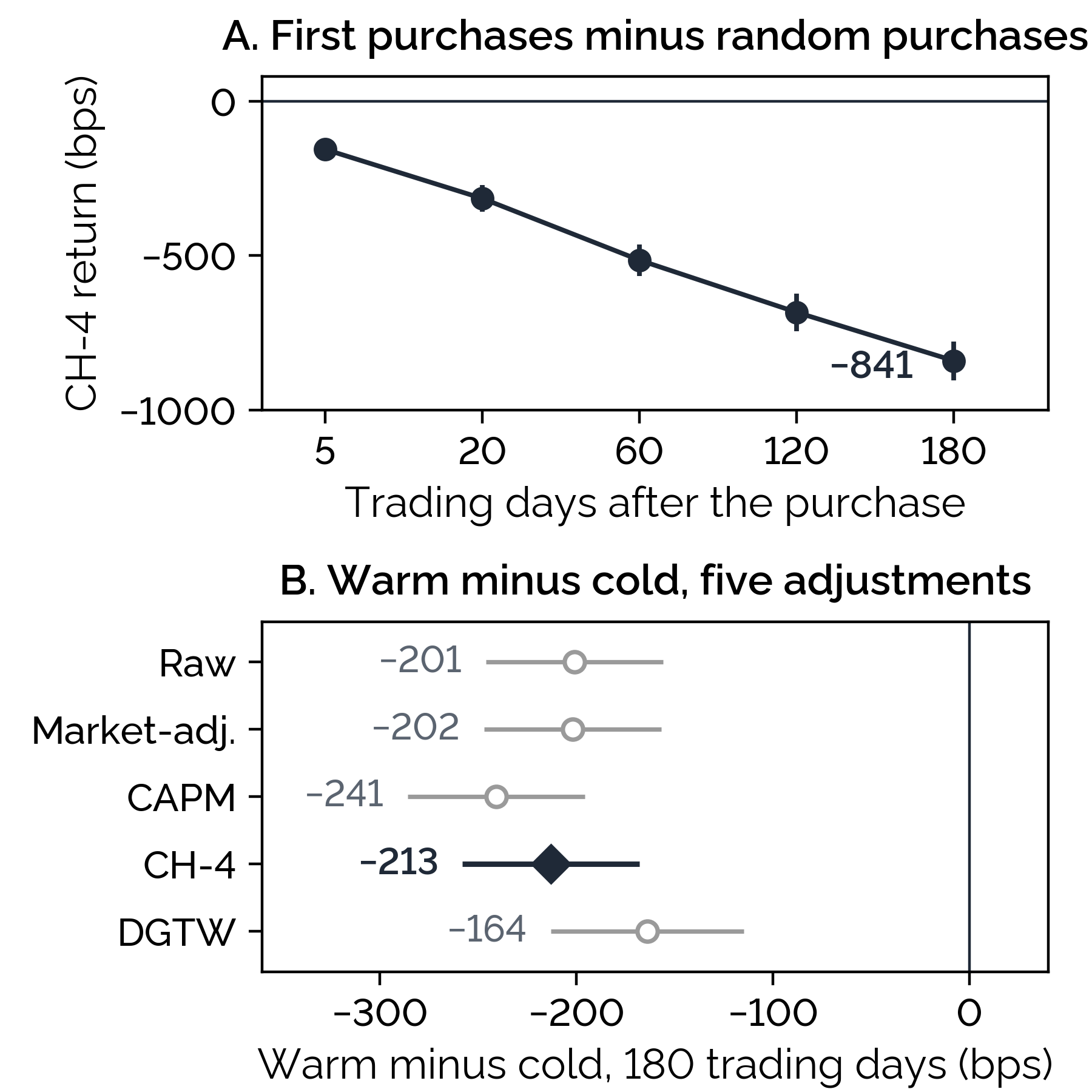
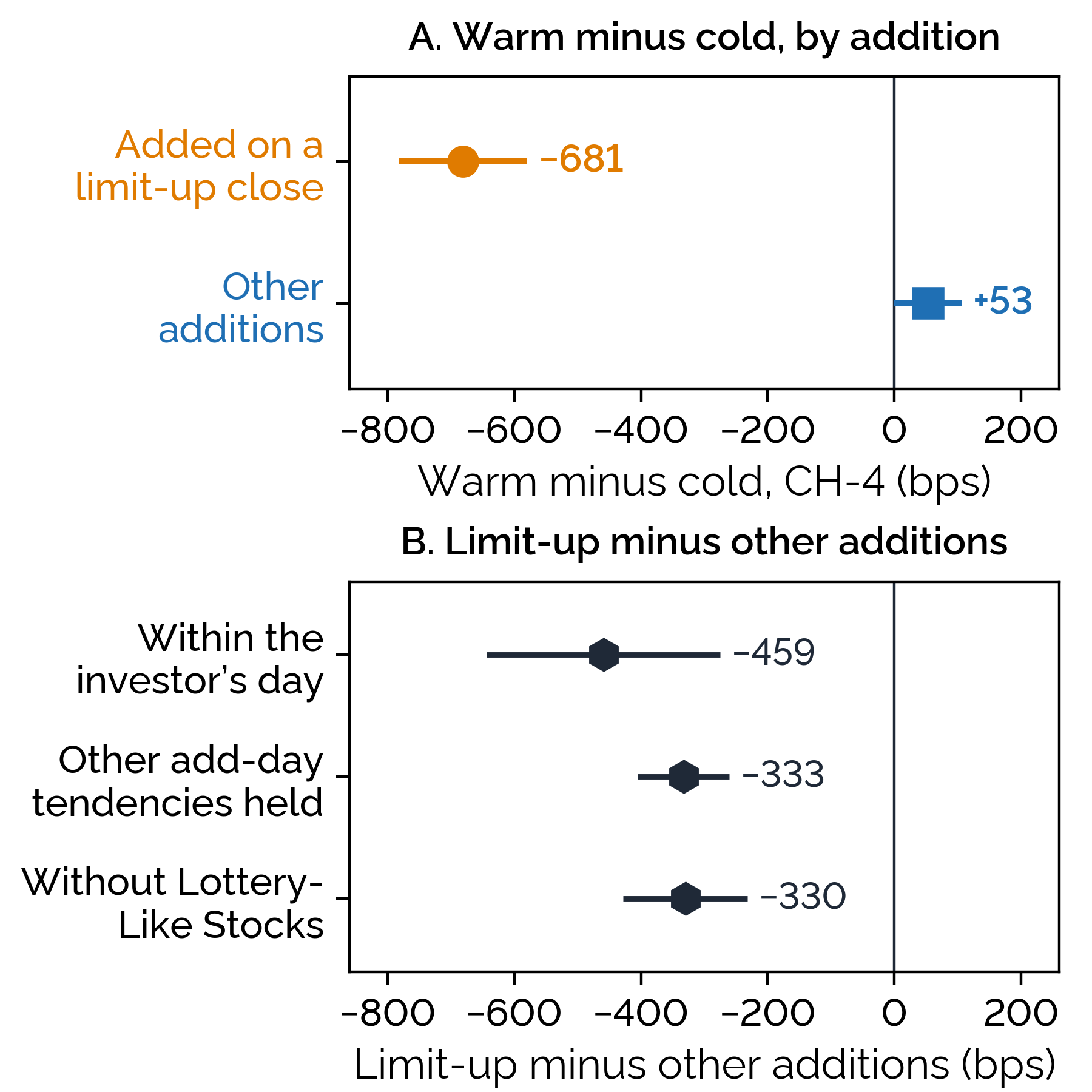
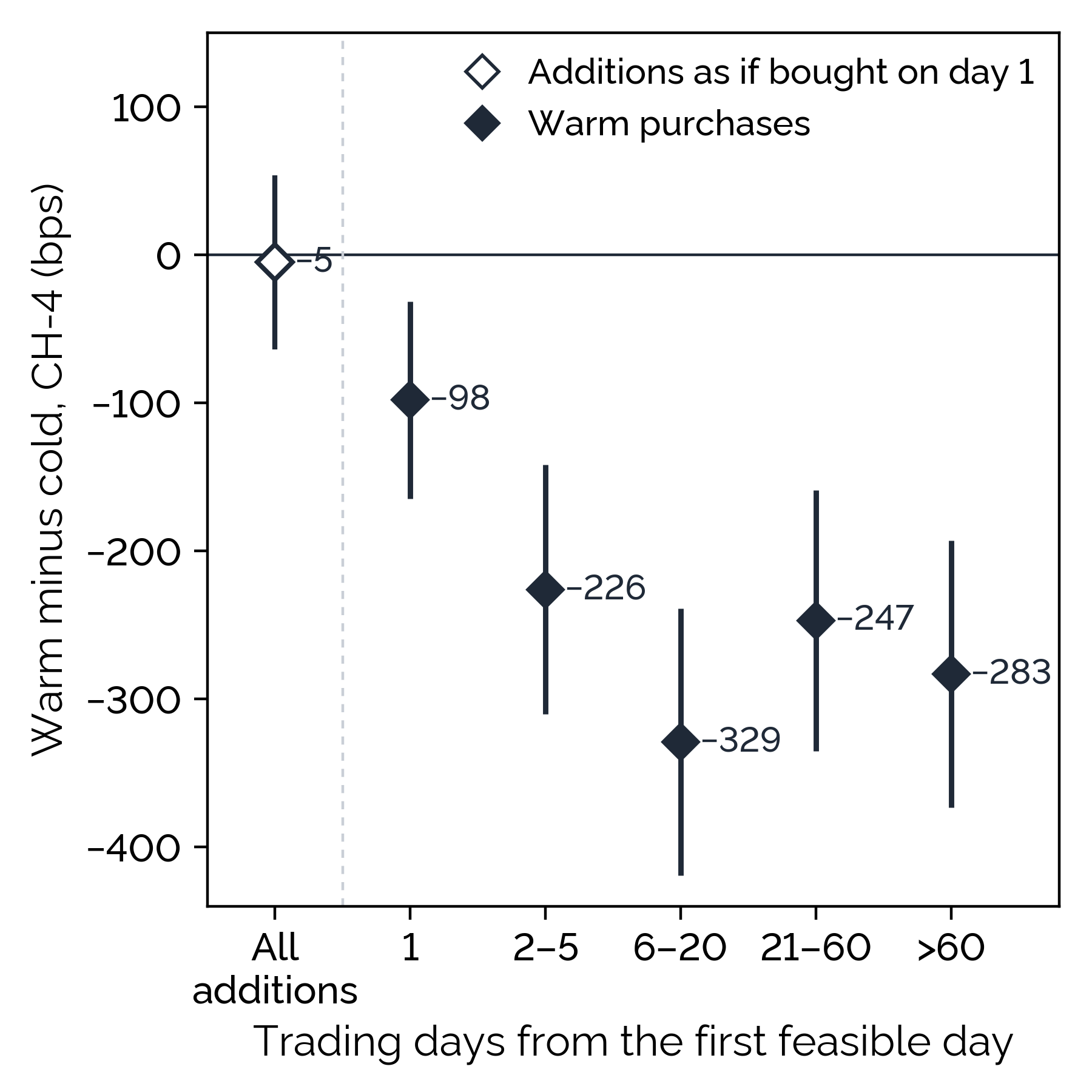
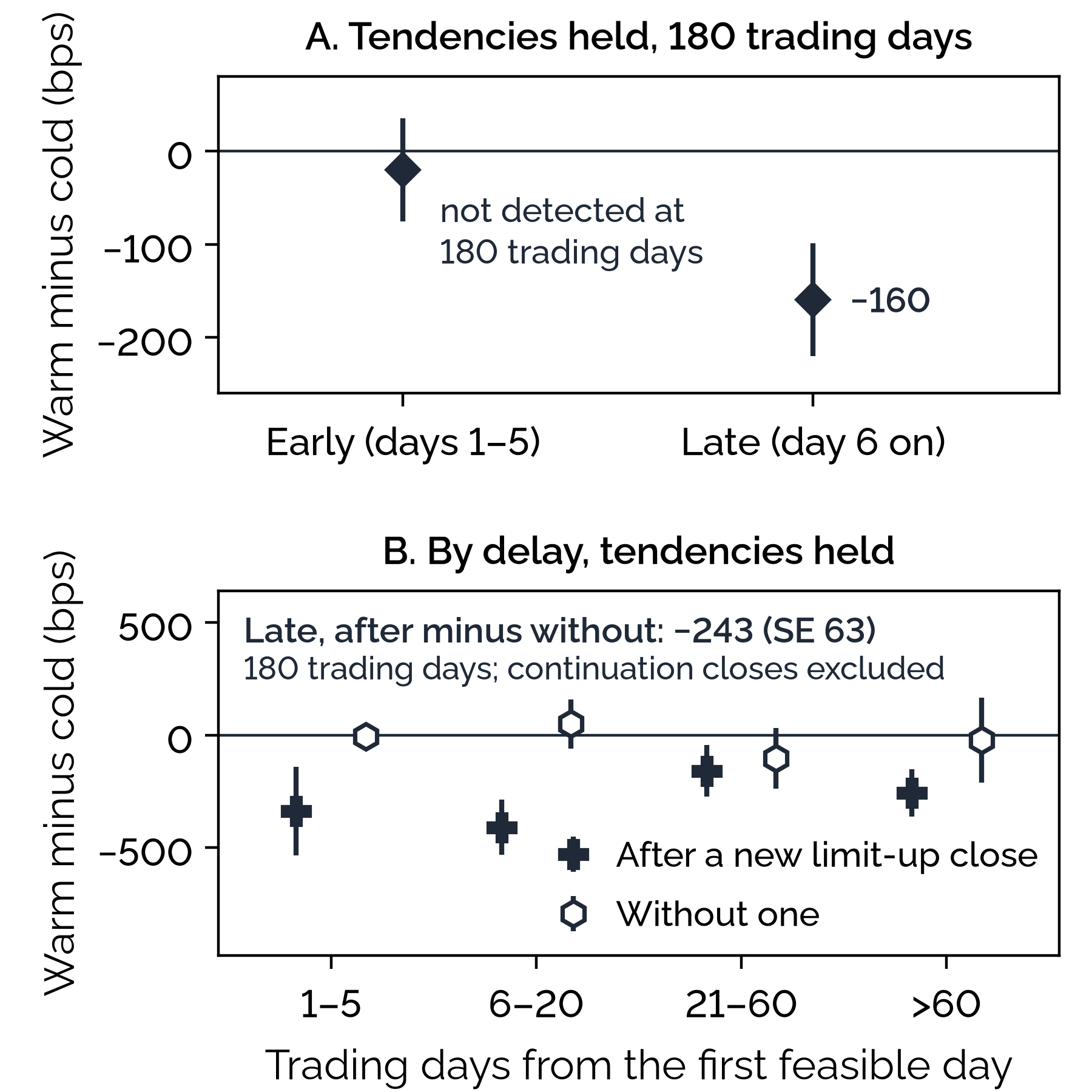
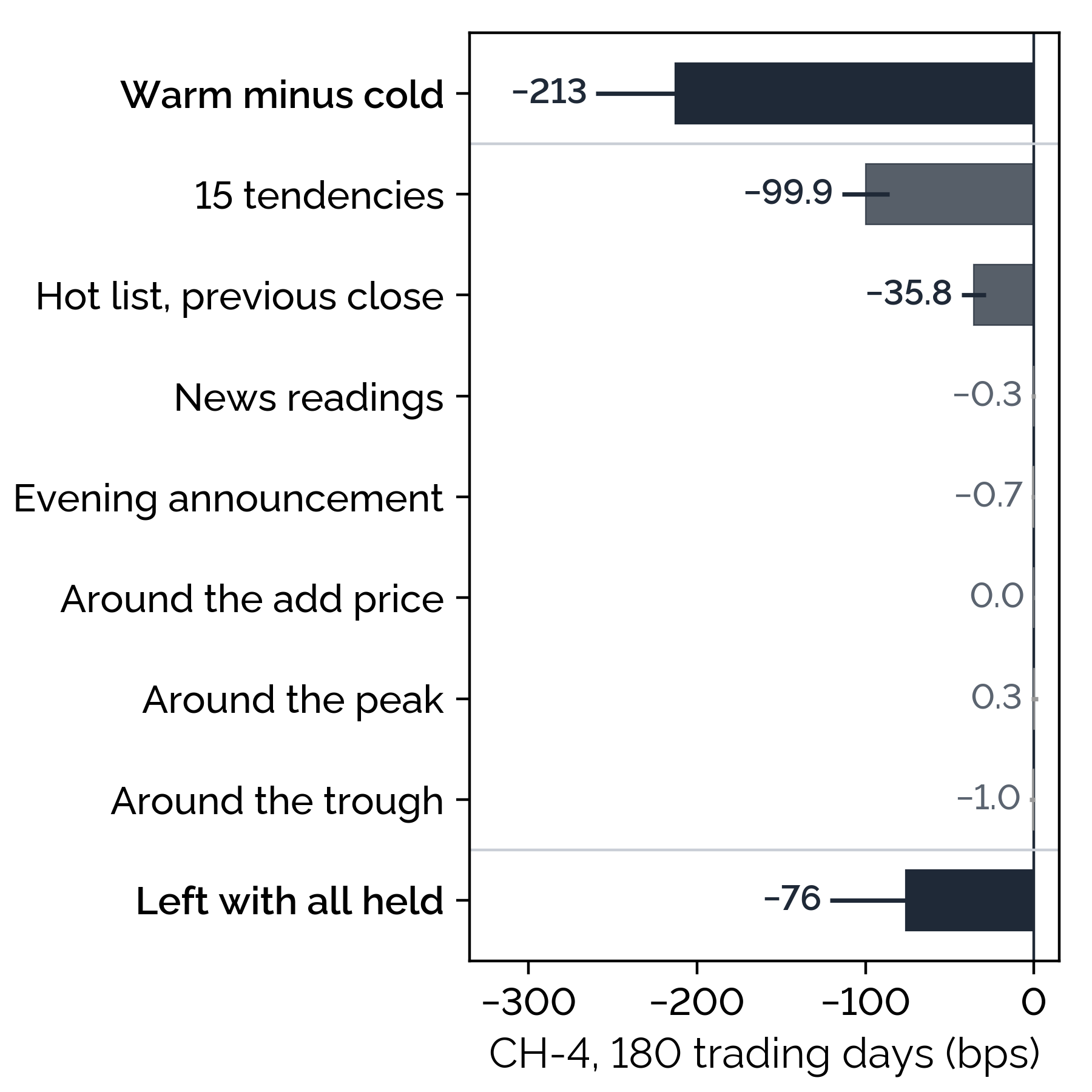
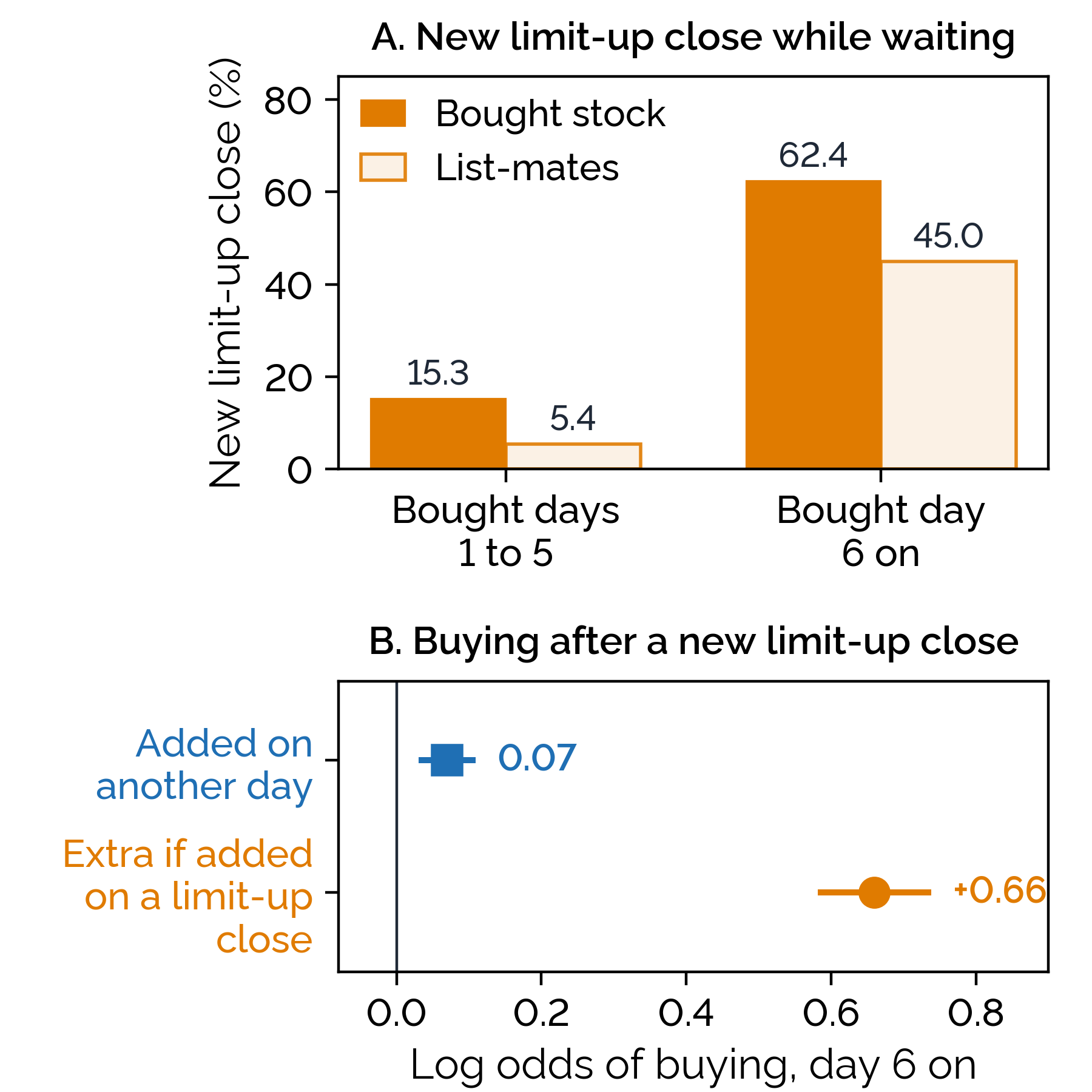
What role does stock following play in retail investing? A watchlist, a list of stocks to follow, permits deliberation, so warm purchases of stocks added to the watchlist on an earlier day should outperform the same investors’ cold purchases of stocks never watchlisted or added on the purchase day. Using a Chinese trading platform’s dated, priced watchlist additions and investors’ first purchases, I instead find warm purchases underperform cold purchases by 213 bps in Chinese four-factor-adjusted returns over 180 trading days, concentrated in stocks added on a limit-up close, a close at the daily upper price limit. Even holding documented buying tendencies, patterns in stock characteristics, fixed, late warm purchases, made after the first 5 trading days from the first day the stock could be bought, underperform cold purchases by 160 bps under that adjustment over 180 trading days. Yet deliberation, measured by news readings (opening stock-related articles), and reference dependence, measured by the watchlist-addition price and highest and lowest closing prices since watchlist addition, account for none of the gap. Beyond these alternatives, choice within investors’ watchlists favors stocks after another limit-up close matching the watchlist-addition event, consistent with similarity-based recall: present events evoke similar past experiences.